A growing SaaS business hits a wall around the 500-customer mark. Support via a shared Gmail inbox becomes chaos: tickets get lost, responses duplicate, customers get angry. Hiring three support agents helps but doesn’t solve the root problem: there’s no system.
Intercom is the answer to this chaos. But let’s be honest: it’s not just a “chat widget for your site.” It’s a powerful platform that changes the DNA of customer interaction. And it’s priced accordingly.
Website: intercom.com
The Customer Pain: What Happens Without a System
Without a support platform, a SaaS company loses:
- 15–20% of customers in the first year due to poor onboarding
- 3–5 hours/day of team time searching for context across fragmented channels
- The ability to proactively influence churn — problems pile up until the customer silently leaves
Intercom solves this on three levels: communication (chat, email, messengers), automation (bots, triggers), and analytics (funnels, retention).
How Intercom Solves It — Layer by Layer
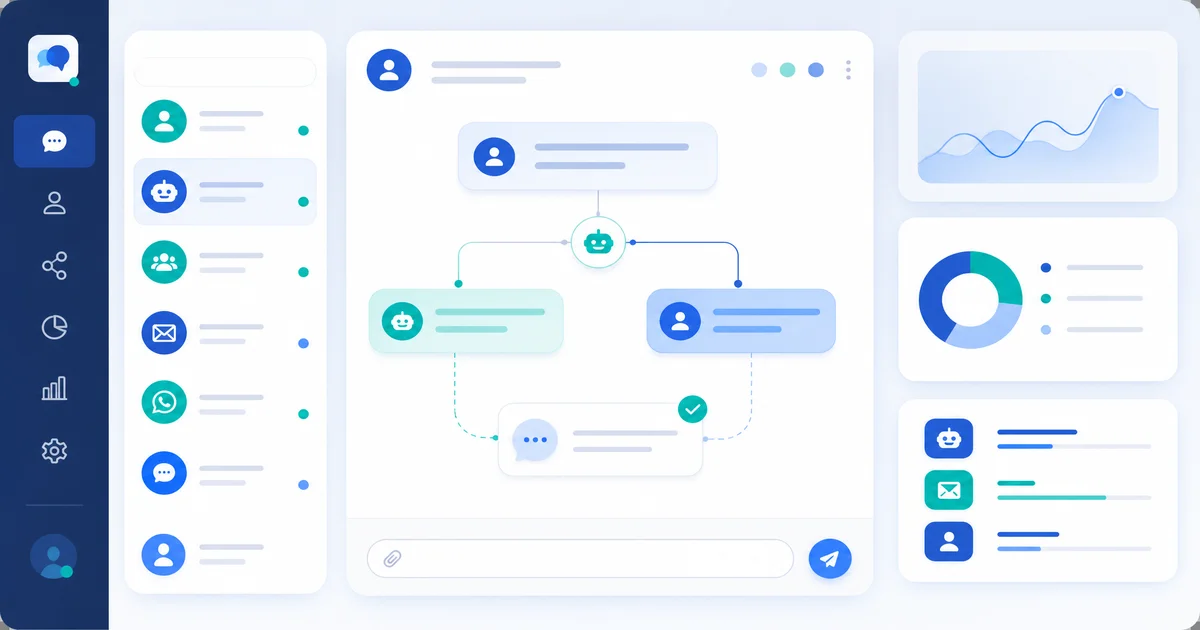
Layer 1: Unified Inbox. All conversations — website chat, email, WhatsApp, Facebook Messenger — merge into one interface. The agent sees customer history, plan, and in-product activity. Context never gets lost switching channels.
Layer 2: Proactive Communication. Intercom sends messages not in response to queries, but triggered by behavior: customer inactive for 7 days → offer help; customer used 80% of limit → warn; customer clicked “cancel subscription” → instant chat. This shifts support from reactive to proactive.
Layer 3: Resolution Bot (Fin). An AI agent (GPT-4 + company data) that answers common questions without human involvement. Trained on Help Center, tickets, and documentation. According to Intercom, Fin resolves up to 60% of queries automatically.
Layer 4: Support Analytics. Query volume, topics, CSAT, at-risk customers, support cost per customer. Data for managing both team and product.
Honest Assessment
Intercom isn’t for everyone. The starter plan is $29/month for basic chat without AI, but actually functional features start at $85/month (Pro) per seat. For a small business with 2–3 support staff, that’s $170–255/month — expensive.
The learning curve: setting up rules, triggers, email series, and the AI bot takes 2–3 weeks. Intercom requires a dedicated platform admin — “set and forget” doesn’t work.
Intercom is also tied to their ecosystem. Exporting data to your own analytics is complex, and the API has aggressive rate limits. You pay not just in money but in flexibility.
Affiliate Program
Intercom uses PartnerStack with 20% commission on the first year of referral payments. At an average ticket of $85/month, that’s about $204 per referral per year. 90-day cookies. The appeal: high average check and long SaaS customer lifecycle. But conversion is lower than mass-market products — Intercom decisions take time, often after a pilot.
When Intercom Isn’t Needed
- Under 100 customers and 10 queries/day — Crisp or Tidio will do
- You just need a chat widget without automation — use free solutions
- You’re bootstrapping and counting every dollar — return to Intercom at 500+ customers
Intercom is the support operating system for mature SaaS. Expensive, complex, but if you’ve outgrown basic chat — there’s virtually no alternative in automation depth.
Hidden Features Rarely Mentioned
Product Tours. Create interactive in-product tours — step-by-step hints pointing users to key features. Not onboarding emails, but guided experience inside the interface. Trial-to-paid conversion increases by 15–25%.
Series (Automated Sequences). Multi-step communication scenarios: welcome message → day 3 check-in → day 7 case study → day 14 webinar invite. Can branch by behavior: opened email → one path, didn’t open → another.
In-Product Surveys. Microsurveys (1–2 questions) inside chat for NPS, CSAT, or CES. Responses enriched with customer data — plan, tenure, activity. Correlates satisfaction with objective metrics.
Alternatives by Niche
- Crisp — cheaper, simpler, for startups. No Proactive Messaging or Product Tours.
- Zendesk — stronger in ticketing, weaker in chat and automation. For enterprise with formal SLAs.
- HubSpot Service Hub — if already in the HubSpot ecosystem. Seamless CRM integration, weaker chat.
- Freshdesk — budget option for B2C with high ticket volume. No AI bot at Fin’s level.