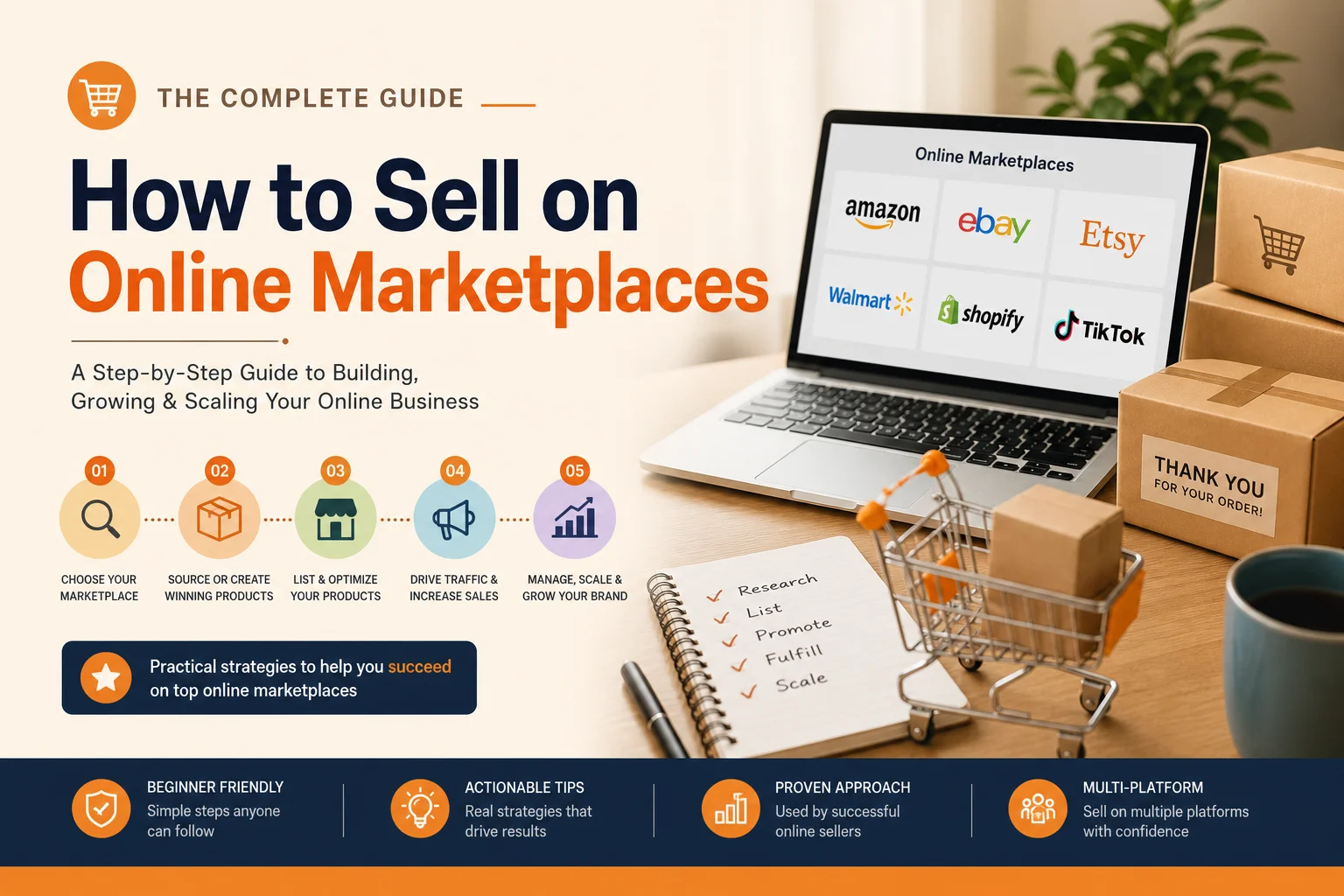
How to Sell on Marketplaces: From Zero to First Profit
Selling on marketplaces in 2026 is not magic and not passive income. It’s work that, done right, pays off in 4-8 weeks. Step by step: what to do, in what order, and where the pitfalls lie.
Recommended platforms: amazon.com, ebay.com
Step 1: Choose the Right Platform
Don’t register everywhere. Pick 1-2 platforms that match your product.
eBay — universal with 700M visitors. Fits almost everything. Main downside: high fees (13.25% + /bin/zsh.30). Critical: eBay favors sellers with history. The first 10 sales are the hardest.
Amazon — for private labels or popular product resale. FBA (Amazon handles fulfillment, ~30% fee) or FBM (you ship, ~15%). Heavy competition from Chinese sellers.
Bonanza — eBay alternative for clothing, handmade, decor. 3.5% + /bin/zsh.25 fees. Low entry barrier but 20-30x less traffic. Good secondary channel.
Etsy — handmade, vintage, craft supplies only. 6.5% + /bin/zsh.20 fees. High AOV (-50). Strict rules: AliExpress resale = ban within a week.
Redbubble and Zazzle — print-on-demand. No inventory: upload a design, the platform prints on t-shirts, posters, cases, and ships. 5-25% royalty. Great no-investment entry.
Mercari — secondhand goods in the US and Japan. 10% + /bin/zsh.50 fees. Very simple app: snap a photo, list, ship. Fastest-growing C2C platform.
Step 2: Create Great Listings
Title. The first 3-5 words decide everything. Bad: “Beautiful t-shirt.” Good: “Men’s Cotton T-Shirt Black Size M Mountain Print.” Include keywords: what it is, who it’s for, color, size, material.
Photos. Minimum 5-7 shots from different angles. Natural light, neutral background. The first photo is the most important.
Description. Don’t copy manufacturer specs. Write: dimensions, material, care instructions, who it’s for. The first sentence answers “why should I buy this.”
Price. Check competitors: sort items in your category by price and find the median. Newcomers should price 10-15% below median to build sales and reviews.
Step 3: Logistics
Three options:
- Self-ship: store at home, go to the post office. Cheap, not scalable. Good for 5-10 items.
- Fulfillment (FBA, eBay Fulfillment): ship to the platform’s warehouse, they handle everything. Expensive (~30% on Amazon) but Prime delivery builds trust.
- Print-on-demand: no inventory. You upload a design, the platform produces and ships. Ideal for beginners with no budget.
Step 4: Marketing
Pinterest. The best social network for products. Create a pin for each item with a quality photo and link. Pins surface for months — unlike Instagram.
TikTok Shop. Product demo videos convert far better than static photos. First 2 seconds must hook — show the result, not the packaging.
Google Shopping. Most marketplaces auto-submit products. You don’t need to configure anything.
Affiliate programs. Nearly every marketplace has one: eBay Partner Network (up to 70% of eBay’s fee), Amazon Associates (1-20%), Etsy Affiliate (4%). As a seller you don’t use these directly, but as an affiliate you can promote others’ products for separate income.
Step 5: Reviews
Without reviews, nobody buys expensive items. Tactic for beginners: ask friends or early customers for honest reviews. Don’t buy fake ones — platforms ban for this. Better: sell your first 5 items at cost to acquaintances with a review request.
Respond to negative reviews quickly and constructively. Buyers notice your reaction more than the complaint itself.
Step 6: Analytics and Scaling
After a month, calculate unit economics: sale price minus platform fee minus COGS minus shipping minus promotion = net profit per item.
Scaling rule: one successful item spawns a product line. A “Mountains” t-shirt sells — make a hoodie, poster, and phone case with the same design.
Pitfalls
- Account bans. eBay and Amazon ban for suspicious activity without warning. Always read platform rules.
- Taxes. US sales over /year trigger a 1099-K. Consult an accountant.
- Seasonality. Some products sell once a year. Plan inventory 2-3 months before peak season.
Startup Checklist
- Choose a platform (30 min)
- Prepare 5 products or designs (2-3 hours)
- Take 5-7 photos each (1 hour)
- Write keyword-rich listings (1 hour)
- Price 10-15% below market median
- Create Pinterest account, pin everything (30 min)
- Sell first 5 items to acquaintances for reviews (1-2 weeks)
Bottom line: you can launch a store in one day and get real orders in two weeks. The main thing is to start, not to keep reading.